+1 (951) 297 8375
Fax: +1 (951) 602
8264
contact@karmadocs.com
Mon - Fri: 9:00 AM - 5:00 PM

When antidepressants fail, TMS offers a new path forward. An FDA-cleared, non-invasive breakthrough that uses magnetic pulses to awaken the brain's natural ability to heal.
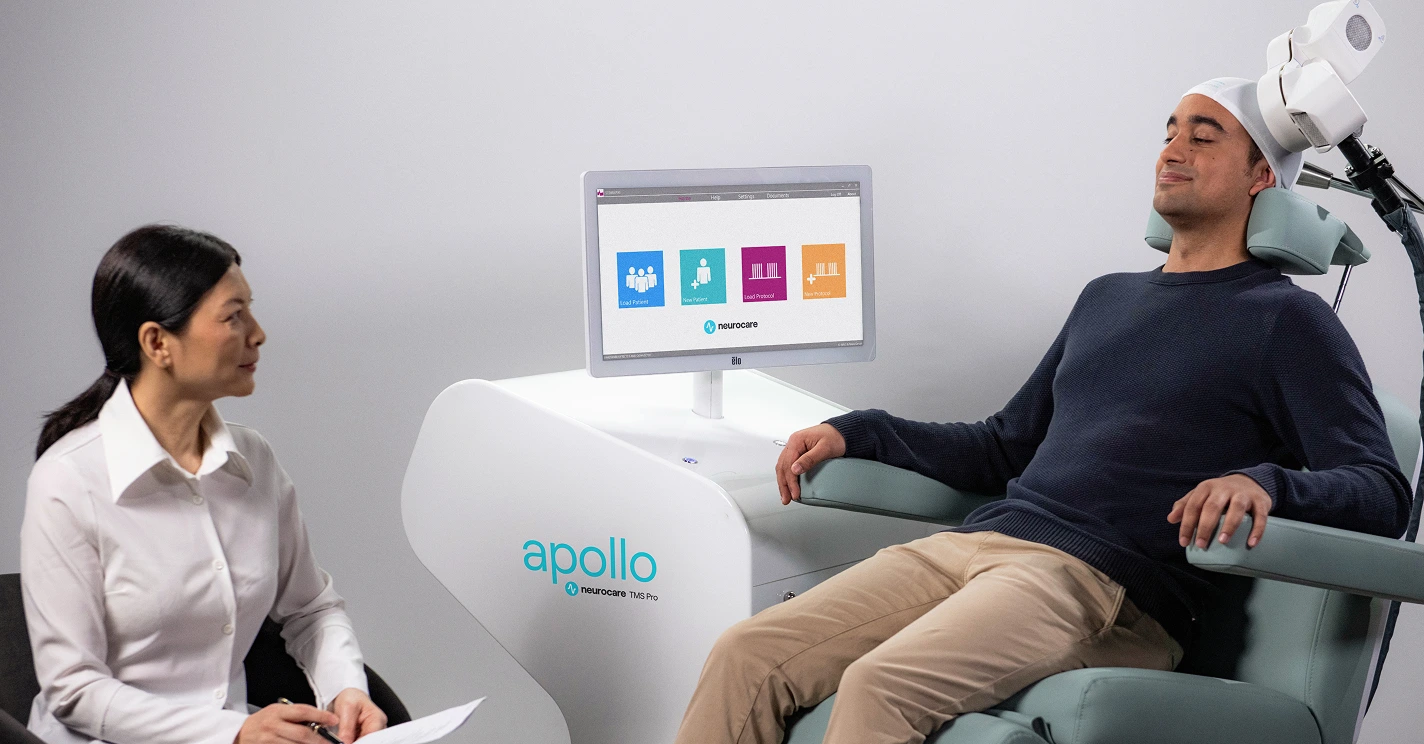
Depression is not just a chemical imbalance; it is often an electrical one. Brain imaging studies show that people with depression have decreased activity in the Dorsolateral Prefrontal Cortex (DLPFC), the area responsible for mood regulation and executive function.
Transcranial Magnetic Stimulation (TMS) uses highly focused magnetic pulses—similar in strength to an MRI—to stimulate these dormant neurons. This stimulation increases blood flow and glucose metabolism, effectively "waking up" these areas and restoring normal function.
Think of it as physical therapy for the brain. Through a process called neuroplasticity, TMS strengthens neural pathways, allowing the brain to heal itself over time without the systemic side effects of medication.
For many, TMS provides relief when other treatments have failed.
Proven safe and effective for Major Depressive Disorder and OCD.
No weight gain, sexual dysfunction, or sedation common with pills.
58% of patients respond, and 37% achieve full remission.
Walk in, walk out. Drive yourself home immediately after.
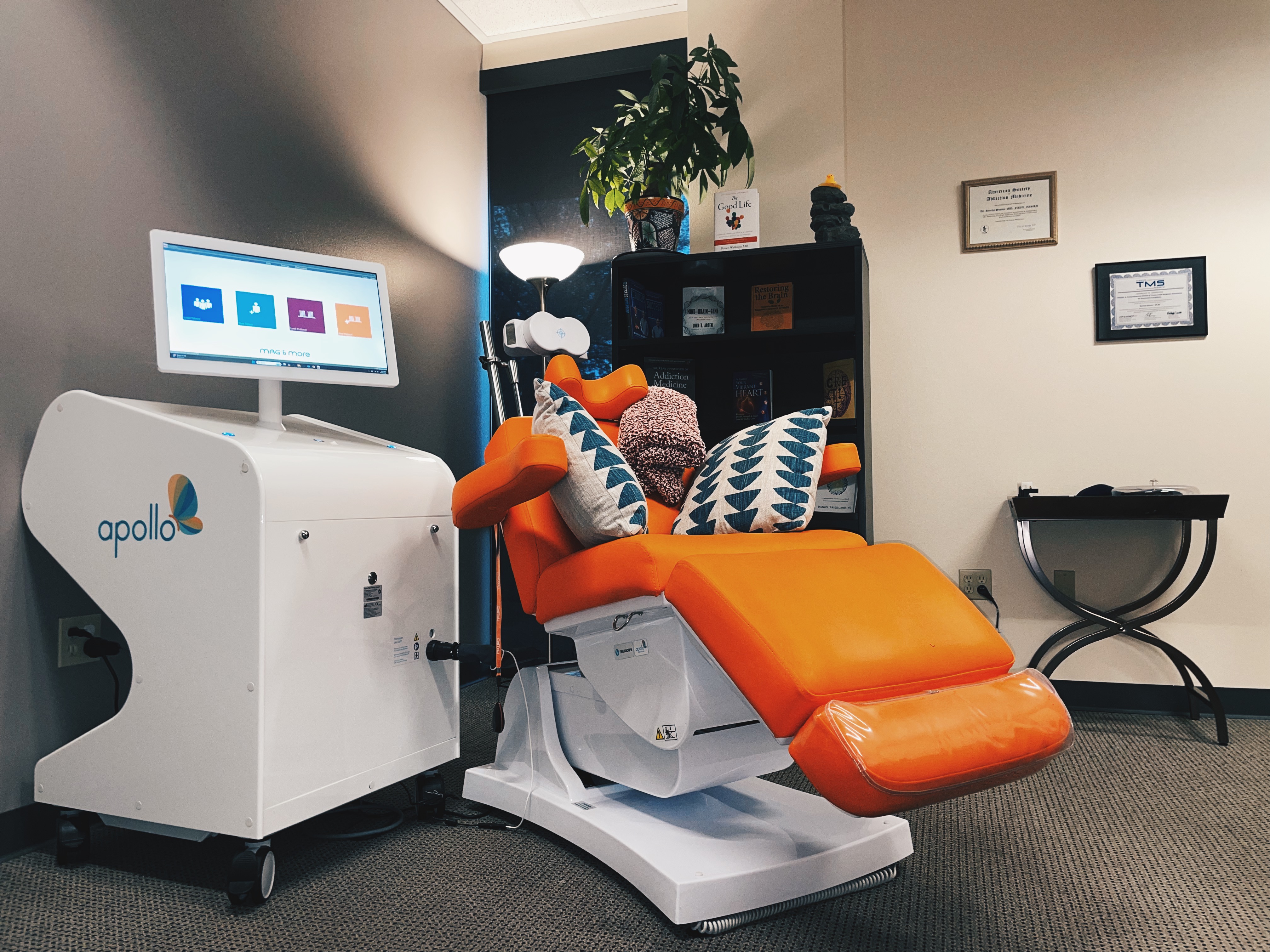
A typical course of treatment involves daily sessions over 4-6 weeks.
You'll relax in a comfortable chair. No sedation is used, so you remain awake and alert throughout the 20-30 minute session.
A magnetic coil is placed gently against your head, delivering focused magnetic pulses to stimulate nerve cells in the brain.
Since there's no anesthesia, you can drive yourself home or back to work immediately after treatment.
Our TMS therapy program follows a structured, evidence-based pathway designed to deliver lasting relief from treatment-resistant depression — guided by board-certified psychiatrists at every step.
Your journey begins with a comprehensive evaluation by our board-certified psychiatrists to assess your diagnosis, treatment history, and determine your candidacy for TMS therapy — including screening for contraindications.
Plans are developed using FDA-cleared protocols and evidence-based medicine — including motor threshold calibration, precise coil positioning over the DLPFC, and session frequency tailored to your specific needs.
Each TMS session is administered by certified TMS technicians and overseen by MDs using FDA-cleared TMS devices. Focused magnetic pulses are delivered to targeted brain regions across your 4–6 week treatment course — with no anesthesia and no downtime.
Wellness tracking aligned with APA (American Psychiatric Association) guidelines ensures your progress is measured using validated depression scales. We monitor your response throughout treatment and offer maintenance sessions to support long-term remission.
Hear from patients who overcame treatment-resistant conditions and reclaimed their lives through our FDA-cleared TMS therapy.
"I spent decades dealing with Major Depressive Disorder and tried four different antidepressant medications, none of which worked long-term. Undergoing the 6-week non-invasive TMS course at Karma Doctors changed everything. The treatment was completely painless, had no side effects, and brought me into full remission."
Attorney
"Severe postpartum depression left me feeling completely disconnected from my newborn. I wanted a safe, non-drug option, and TMS at Karma Doctors was the perfect solution. The technicians were incredibly kind and professional. After two weeks, the fog finally lifted."
Retail Manager
"As an engineer, I loved that TMS was backed by solid clinical data and targeted the exact brain circuits involved in my depression and anxiety. I could drive myself to and from sessions and get straight back to my active life. Unbelievably effective."
Engineer
Most patients report a tapping sensation on the scalp during treatment, which can be annoying but typically not painful. Some may experience mild scalp tenderness or a headache after the first few sessions, but this usually subsides as the course continues. OTC pain relievers can be used if needed.
Yes, most major insurance plans (including Medicare) cover TMS for patients who have been diagnosed with Major Depressive Disorder and have tried medication without success. Our intake team will handle the pre-authorization process for you.
Response is individual. Some patients report improvements in sleep and energy within the first 2 weeks. Mood improvements typically become noticeable around week 3 or 4. It's important to complete the full 6-week course for sustained results.
TMS has been FDA-cleared since 2008 and has a high safety profile. Unlike medications which can have long-term metabolic or systemic effects, TMS has no known long-term negative side effects. It does not affect memory or cognition.
Many patients experience long-lasting remission. If symptoms do return months or years later, "maintenance" or "booster" sessions are often effective in restoring wellness quickly.
You don't have to live with the weight of depression forever. Discover if TMS is the missing piece in your recovery journey.