
Is TMS the Same as Shock Therapy?
Short answer? No, TMS is not the same as shock therapy.
But it’s completely understandable why people confuse them. Both treatments involve the brain. Both are used for depression. And both can sound intimidating at first.
Let’s unpack this clearly and calmly.
What People Mean by “Shock Therapy”
When someone says “shock therapy,” they’re usually referring to Electroconvulsive therapy (ECT).
ECT has been used for decades to treat severe mental health conditions, especially:
- Severe major depression
- Treatment-resistant depression
- Catatonia
- Severe bipolar episodes
During ECT:
- The patient is placed under general anesthesia
- A controlled electrical current is passed through the brain
- A brief seizure is intentionally triggered
- The procedure is done in a hospital setting
Modern ECT is much safer than older portrayals suggest. However, it still involves anesthesia and can cause temporary memory issues.
What Is TMS?
TMS stands for Transcranial Magnetic Stimulation.
It is a non-invasive, FDA-approved treatment for depression and other mental health conditions.
During TMS:
- You remain awake
- No anesthesia is used
- No seizure is induced
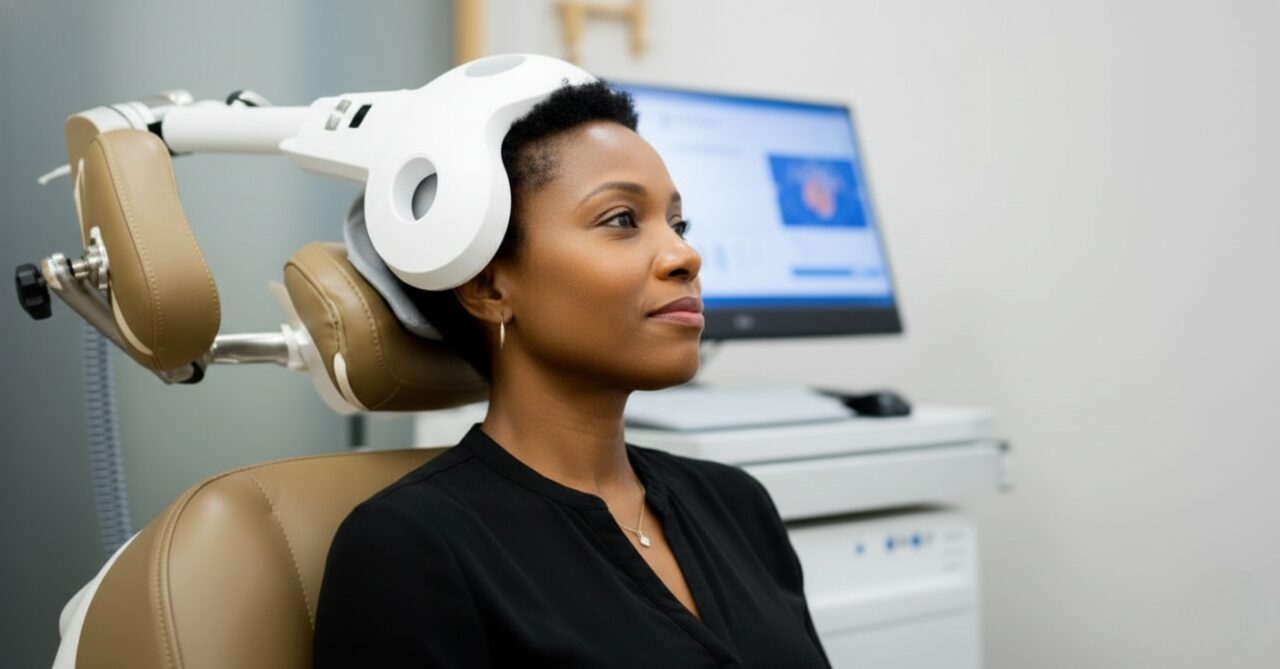
- A magnetic coil is placed on your scalp
- Pulses stimulate specific brain areas linked to mood regulation
The Key Differences at a Glance
| Feature | TMS | ECT (“Shock Therapy”) |
| Uses electricity directly? | No (uses magnetic pulses) | Yes |
| Requires anesthesia? | No | Yes |
| Causes a seizure? | No | Yes |
| Memory side effects? | Rare | Possible |
| Outpatient procedure? | Yes | Often hospital-based |
| Awake during treatment? | Yes | No |
These are fundamentally different procedures.
Why the Confusion Happens
The confusion usually comes from:
- Both treatments are used for depression.
- Both involve stimulation of the brain.
- Media portrayals of ECT created fear around “brain stimulation” treatments.
But medically and technically, TMS and ECT are entirely different approaches.
How TMS Actually Works (In Simple Terms)
In depression, certain brain regions, particularly those involved in mood regulation, can become underactive.
TMS uses focused magnetic pulses to stimulate these specific areas, especially the left dorsolateral prefrontal cortex (a region associated with mood control).
Think of it like:
- Gently “waking up” underactive circuits
- Improving communication between brain regions
- Gradually restoring healthier activity patterns
There is no seizure. No systemic shock. Just targeted stimulation.
Is TMS Safe?
TMS is considered very safe.
Common side effects include:
- Mild scalp discomfort
- Temporary headache
- Slight tapping sensation during treatment
Serious complications are rare.
Because there’s no anesthesia, patients can:
- Drive themselves home
- Return to work immediately
- Continue daily activities
This makes TMS especially appealing for individuals who want an option beyond medication without the intensity of ECT.
When Is ECT Used Instead?
ECT is typically recommended for:
- Severe depression with suicidal risk
- Psychotic depression
- Catatonia
- Situations where rapid symptom relief is critical
ECT can be life-saving in acute psychiatric emergencies. It’s highly effective but used strategically due to its intensity.
TMS, on the other hand, is often recommended for:
- Treatment-resistant depression
- Patients who cannot tolerate medication side effects
- Individuals seeking a non-invasive alternative
Both have their place. They are not competitors; they are different tools.
Which Is More Effective?
Both treatments are effective, but in different contexts.
ECT often works faster and is highly effective for severe or life-threatening depression.
TMS is effective for many patients with moderate to severe depression, particularly those who haven’t responded well to medication.
The best treatment depends on:
- Severity of symptoms
- Medical history
- Medication response
- Risk factors
- Patient preference
A qualified psychiatrist can help determine which option is appropriate.
Does TMS Hurt?
Most patients describe the sensation as:
- A tapping feeling
- Mild scalp pressure
- Slight muscle twitching near the forehead
It can feel unusual at first, but many people adjust quickly.
There is no pain in the way people imagine “shock therapy” to feel.
Is TMS a Last Resort?
Not necessarily.
While it’s commonly used for treatment-resistant depression, many providers now consider it earlier in the treatment process, especially for individuals who:
- Experience medication side effects
- Prefer non-medication approaches
- Have chronic depression
Mental health treatment is becoming more personalized, and TMS is part of that evolution.
The Stigma Factor
The term “shock therapy” carries historical weight. Old movies and outdated practices have shaped public perception.
But modern psychiatric care is evidence-based, regulated, and patient-centered.
TMS is not an extreme measure. It’s a structured medical treatment supported by research and FDA approval.
When to Consider Talking to a Specialist
If you are experiencing:
- Persistent depression lasting more than two weeks
- Lack of improvement with medication
- Intolerable medication side effects
- Recurrent depressive episodes
It may be worth discussing advanced treatment options with a psychiatrist.
Many clinics now offer virtual consultations, making it easier to explore options without committing immediately to a procedure.
Final Verdict: Are They the Same?
Absolutely not.
TMS:
- Is non-invasive
- Uses magnetic pulses
- Does not cause seizures
- Requires no anesthesia
ECT:
- Uses electrical current
- Induces a controlled seizure
- Requires anesthesia
- It is typically used in more severe cases
The Bottom Line
If fear of “shock therapy” has made you hesitant to explore brain stimulation treatments, know this:
TMS is a completely different experience. And for many people living with depression, it offers hope when other treatments haven’t worked.
If you’re curious about whether TMS might be appropriate for you, speaking with a licensed mental health professional at Karma Doctors & Associates is the safest next step.